Son Tra Peninsula — Da Nang's Green Lung and Its Empty Beaches
Twenty minutes from the city centre: old-growth forest, monkeys crossing the road, and beaches with almost nobody on them.
This page is translated from Vietnamese. Prices and opening hours are checked against Vietnamese sources — see the Vietnamese version for the most recent update.
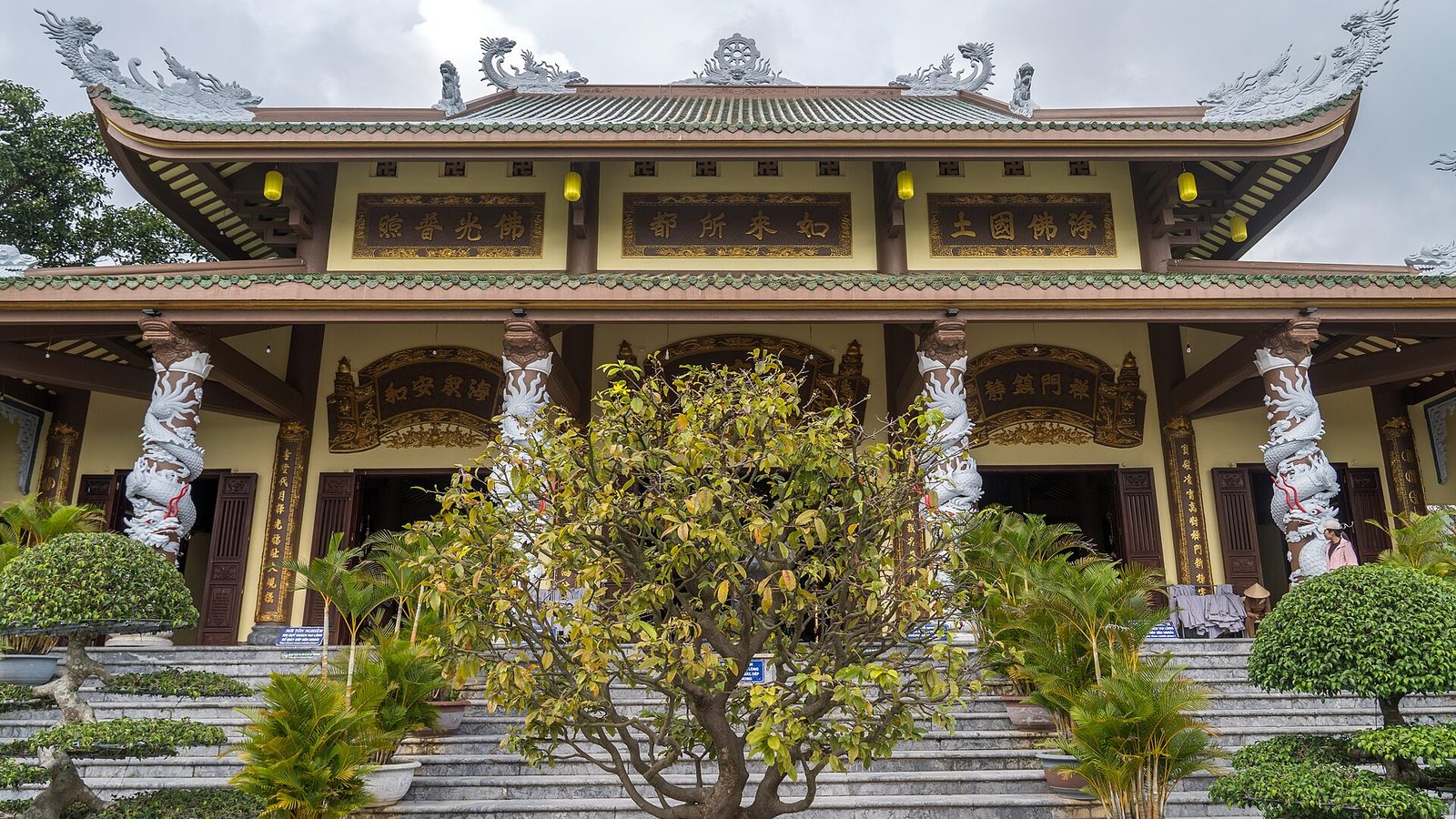
Photo: Alexkom000 · CC BY 4.0 · via Wikimedia Commons (cropped to 16:9 and resized)
Son Tra is the peninsula jutting into the sea northeast of Da Nang, about 10km from the centre. Locals call it Monkey Mountain.
Very few places have intact old-growth forest sitting this close to a city — it is less than twenty minutes’ ride from the centre.
A protected forest on the edge of the city
Son Tra is a nature reserve, and most of its area is forest. What makes it notable is not the size but the location: very few cities in Vietnam have a protected forest inside their own boundaries like this.
Because it is protected, some areas are not open to the public, and some roads are daylight-only. Do not push up side roads with no-entry signs.
The red-shanked douc langur
The species that matters most here is the red-shanked douc langur, a primate endemic to Indochina, sometimes called the queen of the primates for its colouring — red-brown legs, white forearms, a golden-orange face.
Son Tra is one of the few places where you can watch douc langurs in the wild without going deep into forest. But be clear about what you are looking at: the animals that approach the roadside begging for food are usually rhesus macaques, not doucs. Doucs are shy, live high in the canopy and avoid people.
To see them, go early in the morning, bring binoculars, and move slowly and quietly in areas with tall trees. And do not feed any of them — feeding makes the macaques bold, draws them down onto the road and causes accidents.
Linh Ung Pagoda at Bai But

Halfway up the peninsula and facing the bay, Linh Ứng Pagoda at Bãi Bụt is the most recognisable structure on Son Tra — you can see it from Mỹ Khê beach across the water.
The centrepiece is the tallest statue of the Goddess of Mercy in Vietnam, standing with her face to the sea. Fishermen still regard her as guarding the mouth of the bay.
The temple courtyard is a very good place to take in the whole bay of Da Nang, especially late in the afternoon. It is an active place of worship, so dress modestly.
The beaches around the peninsula

There are several small beaches around the peninsula, more sheltered and far emptier than Mỹ Khê:
- Bãi Bụt, right below Linh Ứng Pagoda
- Bãi Rạng, larger, with places to eat
- Bãi Nam and Bãi Đá Đen, small, quiet and rocky
One caution: most of these beaches have no permanent lifeguard. Clear, calm water looks harmless, but rip currents still occur. Do not swim far out, especially alone.
Ban Co Peak and the road up
Bàn Cờ Peak is the highest point reachable by vehicle, with a stone chess board and a statue of an immortal sitting over it. From there you can see the whole city, the mouth of the Hàn River and the Hải Vân pass in the distance.
The road up is narrow, steeply graded and full of blind bends. This is where we have to be blunt:
- Small automatic scooters can lose their brakes on the descent as the brakes overheat. Going down, use engine braking or pump the brakes in bursts; do not hold them on continuously.
- Some stretches hold mist and damp early in the morning, and the surface gets slippery.
- If you are a new rider or unused to mountain roads, take a taxi or a motorbike taxi rather than riding it yourself.
There have been many accidents on this road, mostly on the way down.
What time of day to go
Early morning is best: cool, little traffic, and the likeliest window for seeing doucs. Late afternoon is good for the views, but you need to be off the mountain before dark because the road is unlit.
The dry season, February to August, keeps the road dry. In the rainy season, September to December, it is slippery and often foggy — think carefully before riding a motorbike up.
Son Tra has no entry ticket; access is free.
Combining it with other places
Son Tra works well as a morning in a Da Nang itinerary: ride up to Linh Ứng Pagoda, stop at Bàn Cờ Peak, swim at one of the small beaches and come back to the centre for lunch.
If you would rather not ride the mountain road yourself, Son Tra is the first stop on the Hoi An afternoon tour and on the two-day Da Nang itinerary, both with a driver.
Places
- Nam O Fishing Village — Where Da Nang's Fish Sauce Comes FromAt the foot of the Hai Van Pass is a village that ferments anchovies in wooden vats for twelve months to draw off the first few drops.
- Han Market — Where People in Da Nang Send You for SouvenirsAsk anyone in Da Nang where to buy food to take home and nine will say Han Market. The tenth will say Con Market.
- Con Market — Da Nang's Street Food HeadquartersPeople in Da Nang do not go to Con Market to shop. They go to eat.