Nam O Fishing Village — Where Da Nang's Fish Sauce Comes From
At the foot of the Hai Van Pass is a village that ferments anchovies in wooden vats for twelve months to draw off the first few drops.
This page is translated from Vietnamese. Prices and opening hours are checked against Vietnamese sources — see the Vietnamese version for the most recent update.
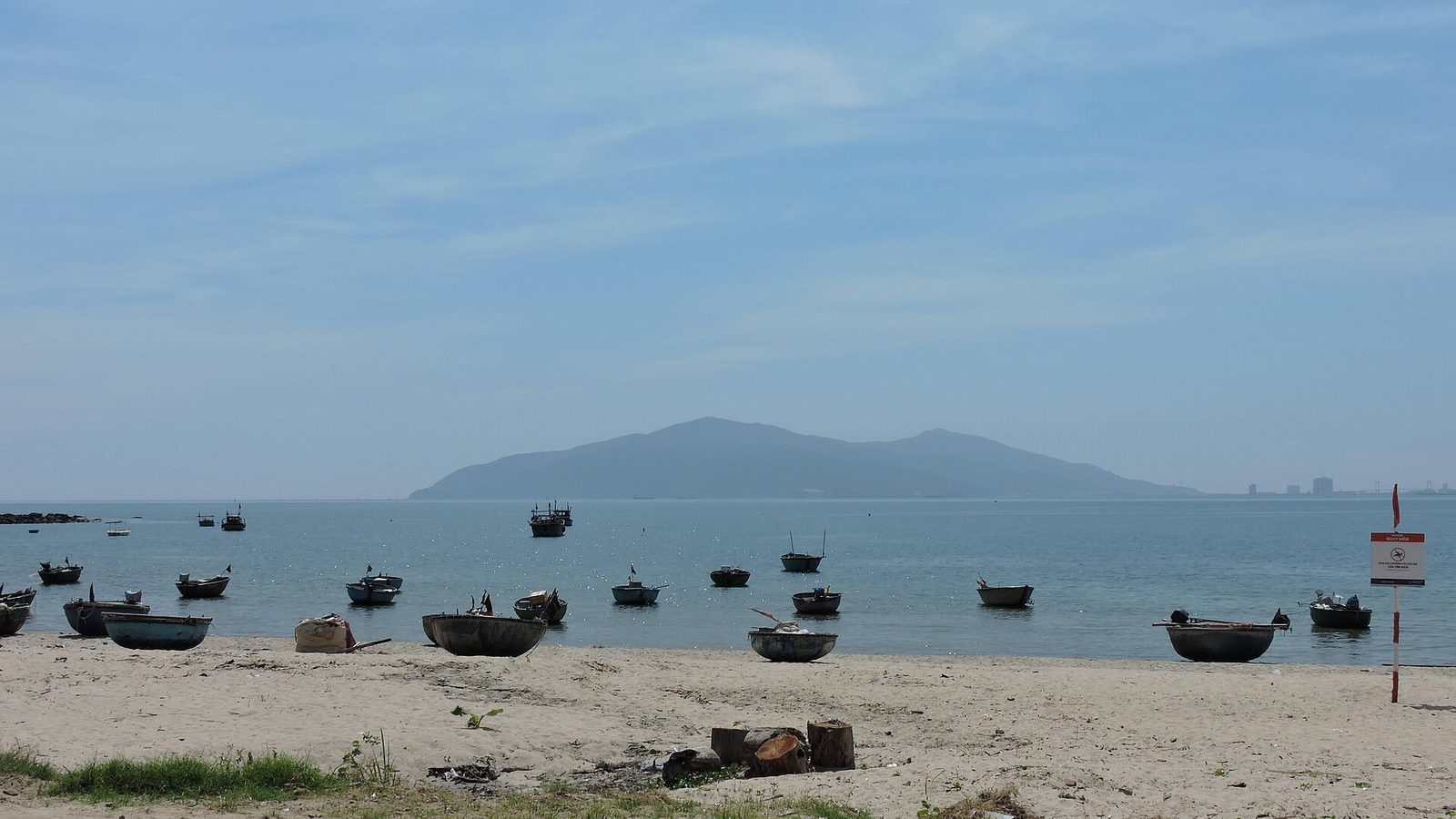
Photo: Bánhmỳchảo · CC0 · via Wikimedia Commons (cropped to 16:9 and resized)
Nam Ô lies northwest of Da Nang, at the foot of the Hai Van Pass, about 15km from the centre. It is one of the oldest fishing villages in the region and the source of Nam Ô fish sauce, the best-known fish sauce in Da Nang.
The Nam O fish sauce trade
Fish sauce has been made here for centuries, and the craft is recognised as national intangible cultural heritage.
The traditional method is simple in ingredients but unforgiving on ratio and time:
- Use black anchovy caught around the third lunar month, when the fish are fattest
- Mix with coarse sea salt, roughly three parts fish to one part salt
- Ferment in wooden or ceramic vats, never plastic
- Leave for twelve months or more, with no shortcuts
The result is dark amber, sharp on the nose and strongly salty — nothing like the diluted industrial product.
That is also why real Nam Ô fish sauce costs more and is made in small quantities. There are plenty of bottles on the market carrying the Nam Ô name that are not, so buying in the village itself is the surest approach.
The village is changing
This needs saying plainly: Nam Ô is no longer the intact fishing village many articles describe.
The area falls within a development zone, part of the coastal land has changed hands, and at times access to the shore has been restricted. The number of households still making fish sauce the traditional way falls year by year.
So what you will find is a village mid-transition — still with sauce makers, still with basket boats, but interleaved with construction. Knowing that in advance saves disappointment, and it also explains why buying from the remaining makers matters while they are still there.
The Nam O rocks
The rocky point at the north end of the village juts into the sea. The stones are covered in green moss from around January to March, which is when most photographers come.
Outside the moss season the point is still worth walking to, but it looks completely different: bare rock, heavier surf.
Take care out on the rocks. Mossy stone is extremely slippery and people fall regularly. Wear shoes with grip, not flip-flops, and stay back from the edge when the surf is up.
What to do and what to eat
Nam O beach is much longer and emptier than My Khe, but it has no permanent lifeguard — bear that in mind before swimming.
Gỏi cá Nam Ô is the local dish: fresh herring made into a salad, eaten raw with forest herbs and rice paper, dipped in a sauce made from the village’s own fish sauce and fish bones.
This is raw fish, so eat it only at busy, well-regarded places — not somewhere quiet where the sourcing is unclear.
There is also one-sun-dried squid, grilled fish, and of course fish sauce to take home.
Moss season and anchovy season
January to March for the moss on the rocks. The third lunar month is black anchovy season, when the sauce makers are at work — come then if you want to see the process. April to August brings calm sea, good for swimming and walking. September to December is rough, with heavy surf on the rocks; better avoided.
Getting there
From central Da Nang, follow the coastal Nguyễn Tất Thành road for about 15km, roughly 25 minutes. The road is good and runs beside the sea nearly the whole way.
Nam Ô is on the way up to the Hai Van Pass, so the two combine well: the village in the morning, the pass at midday, back in the afternoon. Or pair it with the Sơn Trà peninsula at the other end of the city if you have a full day.
If you are flying home with fish sauce, note that it cannot go in cabin baggage — it has to be checked, with a limit of three litres or three kilos per person.
Places
- Han Market — Where People in Da Nang Send You for SouvenirsAsk anyone in Da Nang where to buy food to take home and nine will say Han Market. The tenth will say Con Market.
- Con Market — Da Nang's Street Food HeadquartersPeople in Da Nang do not go to Con Market to shop. They go to eat.
- Ba Na Hills and the Golden Bridge — the Mountain That Was a French TownTwo stone hands holding up a golden ribbon of bridge — the image travelled the world. Few people know the mountain beneath it once held more than 200 French villas before the forest swallowed them.